
Showing posts with label christmas. Show all posts
Showing posts with label christmas. Show all posts
Thursday, December 24, 2009


Sunday, December 20, 2009
Have a Merry, Zombie Christmas!
 Watch out, kid... those brains look mighty tasty!
Justin and I traipsed through the snow last night, schlepping from the East Village of Manhattan into deep, dark Prospect Park, to attend my good friend, Katie's, holiday party. As if the promise free booze, food and friendship weren't prize enough for our travels, this delightful invitation made us committed to the trek:
"I was going to write a long explanation of why we all could use a party, and how we haven’t seen some of you for too long, etc. etc. But you know all of that already. Instead I’ll just include this mash-up of us, Little Women, and zombies:
"CHRISTMAS won't be Christmas without any presents," grumbled Kevin, lying on the rug.
"It's so dreadful to be poor!" sighed Katie, looking down at her old dress.
"I don't think it's fair for some zombies to have plenty of brains, and other zombies nothing at all," added a little zombie, with an injured sniff.
"We've got father and mother and each other," said Peter contentedly, from his corner.
The four young faces on which the firelight shone brightened at the cheerful words, but darkened again as Katie said sadly, —
"We haven't got father, and shall not have him for a long time." She didn't say "perhaps never," but each silently added it, thinking of father far away, where the fighting was.
Nobody spoke for a minute; then Kevin said in an altered tone,—
"You know the reason mother proposed not having any presents this Christmas was because it is going to be a hard winter for every one; and she thinks we ought not to spend money for pleasure, when our men are suffering so in the army of darkness. We can't do much, but we can make our little sacrifices, and ought to do it gladly. But I am afraid I don't;" and Kevin shook his head, as he thought regretfully of all the pretty things he wanted.
"But I don't think the little we should spend would do any good. We've each got a dollar, and the army wouldn't be much helped by our giving that. I agree not to expect anything from mother or you, but I do want to buy Undine and Sintram for myself; I've wanted it so long," said Katie, who was a bookworm.
"I planned to spend mine in new music," said Peter, with a little sigh, which no one heard but the hearth-brush and kettle-holder.
"I shall get a nice box of Faber's drawing-pencils; I really need them," said Kevin decidedly.
"Mother didn't say anything about our money, and she won't wish us to give up everything. Let's each buy what we want, and throw a party, and have a little fun; I'm sure we work hard enough to earn it," cried Katie, examining the heels of her shoes in a gentlemanly manner."
I love having witty friends, who love to nerd-it-up in literary fashion... with appropriately-timed zombie references... just like me!
xoxo,
Rebel Deb
Saturday, December 19, 2009

Wednesday, December 16, 2009

Friday, December 4, 2009

Monday, November 30, 2009

Monday, November 16, 2009

Friday, December 19, 2008
Xmas North vs. Xmas South
Christmas in the North is pretty different than Christmas back home in Carolina, and it has nothing to do with the war between the states.
Here’s a partial list of my favorites from both!
Christmas North:
Ice Skating in Rockefeller Center

Fallen leaves in the East Village
That burning smell when someone’s using her fireplace for the first time MONTHS
Hot chocolate
Goodbye swimsuits, HELLO dessert!
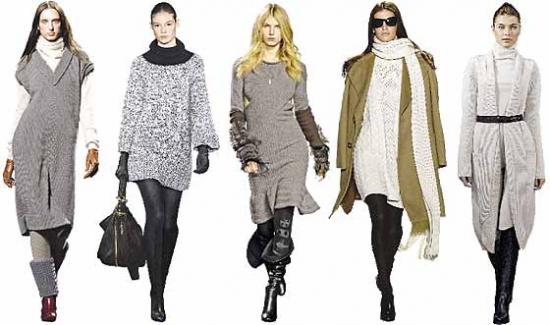
Fluffy sweaters, tight leggings and knee-high boots – my favorite fashion combo!

Cuddling just because it’s cold
Dogs in sweaters!
Christmas South:
HUGE Christmas trees for sale on the side of the road
Christmas music on the radio
Parades down the middle of Main Street in downtown Burlington

Christmas parties with old girlfriends from Salem
My Aunt Elsie’s chocolate chip cookies
Kids building snowmen in their yards
Sledding down the big hill in front of my Granny Blanche’s house
Candlelit vigils at my hometown church on Christmas Eve

What are some of YOUR favorite Xmas activities – North or South?
Xo,
Rebel Deb
Here’s a partial list of my favorites from both!
Christmas North:
Ice Skating in Rockefeller Center

Fallen leaves in the East Village
That burning smell when someone’s using her fireplace for the first time MONTHS
Hot chocolate
Goodbye swimsuits, HELLO dessert!
Fluffy sweaters, tight leggings and knee-high boots – my favorite fashion combo!
Cuddling just because it’s cold
Dogs in sweaters!
Christmas South:
HUGE Christmas trees for sale on the side of the road
Christmas music on the radio
Parades down the middle of Main Street in downtown Burlington
.JPG)
Christmas parties with old girlfriends from Salem
My Aunt Elsie’s chocolate chip cookies
Kids building snowmen in their yards
Sledding down the big hill in front of my Granny Blanche’s house
Candlelit vigils at my hometown church on Christmas Eve

What are some of YOUR favorite Xmas activities – North or South?
Xo,
Rebel Deb
Tuesday, December 16, 2008
Rebel Deb’s Response to “Alternative” Holidays
Maybe I’m insensitive. Maybe I’m just plain ignorant. But, I’m just gonna go ahead and say it anyway…
What the HELL is KWANZAA?
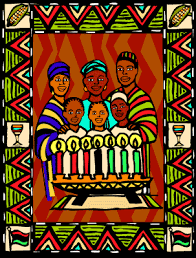 I get that Christmas is a Judeo-Christian holiday that was forced upon Africans (and, later, African Americans) by Europeans. And I totally understand that anybody has a right to celebrate whatever/however they want to – that’s totally cool with me.
I even have friends who celebrate nothing but “Festivus for the Rest of Us.” And I’m totally down with that.
BUT, as cool as it is to do your own thing…
Seriously?
I just don’t get some of the alternative holidays out there. And I have more than a few questions…
Where does Kwanzaa come from? What does the name mean? What does it involve – for example, is there a jolly, fat Kwanzaa Santa who delivers presents, too? Are there Kwanzaa parties where folks wear ugly sweaters with reindeer and Kwanzaa Claus on them? If not, what DO people wear to Kwanzaa parties? And what do people DO when they get there?
Next on the list: Chanukah. Or is it Hanukah?
Judaism? Totally cool. Most of my friends and my boyfriend are at least half-Jewish.
But take pity on a poor Gentile girl and clear some of this up, will ya?
How long is Chanukah? I’ve heard seven, eight, nine days – but what are the EXACT dates?
 Also, do you get a new present EVERY SINGLE DAY during Chanukah? That sounds like a pretty expensive holiday – how big do these presents have to be? And do Jewish kids go to the mall to visit a Chanukah Santa and sit on his lap, too? What’s up with dreidels? Is it just a toy? Does it make music –or, better yet – is it SUPPOSED to? What do you eat at Chanukah parties? Is it like Satyr food, where there’s lots of challah bread and bitter herbs and stuff?
There’s also a heck of a lot of other, WAY more “alternative” holidays that ya’ll might not know about.
Here’s a few to get you started:
Amaterasu celebration, Requiem of the Dead (7th century Japan)
In late seventh century Japan, festivities were held to celebrate the reemergence of Amaterasu or Amateras, the sun goddess of Japanese mythology, from her seclusion in a cave. Tricked by the other gods with a loud celebration, she peeks out to look and finds the image of herself in a mirror and is convinced by the other gods to return, bringing sunlight back to the universe.
Requiems for the dead were held and Manzai and Shishimai were performed throughout the night, awaiting the sunrise. Aspects of this tradition have continued to this day on New Years.
Beiwe Festival (Sámi of Northern Fennoscandia)
The Saami, indigenous people of Finland, Sweden and Norway, worship Beiwe, the sun-goddess of fertility and sanity. She travels through the sky in a structure made of reindeer bones with her daughter, Beiwe-Neia, to herald back the greenery on which the reindeer feed. On the winter solstice, her worshipers sacrifice white female animals, and with the meat, thread and sticks, bed into rings with ribbons. They also cover their doorposts with butter so Beiwe can eat it and begin her journey once again.
Choimus, Chaomos (Kalash of Pakistan)
In the ancient traditions of the Kalash people of Pakistan, during winter solstice, a demigod returns to collect prayers and deliver them to Dezao, the supreme being. "During this celebrations women and girls are purified by taking ritual baths. The men pour water over their heads while they hold up bread. Then the men and boys are purified with water and must not sit on chairs until evening when goat's blood is sprinkled on their faces.

Following this purification, a great festival begins, with singing, dancing, bonfires, and feasting on goat tripe and other delicacies".
Hogmanay (Scotland)
The New Years Eve celebration of Scotland is called Hogmanay. The name derives from the old Scots name for Yule gifts of the Middle Ages. The early Hogmanay celebrations were originally brought to Scotland by the invading and occupying Norse who celebrated a solstitial new year (England celebrated the new year on March 25).
In 1600, with the Scottish application of the January 1 New year and the churches persistent suppression of the solstice celebrations, the holiday traditions moved to December 31.
The festival is still referred to as the Yules by the Scots of the Shetland Islands who start the festival on December 18th and hold the last tradition (a Troll chasing ritual) on January 18th. The most widespread Scottish custom is the practice of first-footing which starts immediately after midnight on New Years.
This involves being the first person (usually tall and dark haired) to cross the threshold of a friend or neighbor and often involves the giving of symbolic gifts such as salt (less common today), coal, shortbread, whisky, and black bun (a fruit pudding) intended to bring different kinds of luck to the householder. Food and drink (as the gifts, and often Flies cemetery) are then given to the guests. [13]
This next one was even practiced in my home state back in the 1800’s!
Junkanoo, Jonkonnu, John Canoe (West Africa, Bahamas, Jamaica, 19th-century North Carolina)
Junkanoo, in the Bahamas, Junkunno or Jonkanoo, in Jamaica, is a fantastic masquerade, parade and street festival, believed to be of West African origin. It is traditionally performed through the streets towards the end of December, and involves participants dressed in a variety of fanciful costumes, such as the Cow Head, the Hobby Horse, the Wild Indian, and the Devil.

The parades are accompanied by bands usually consisting of fifes, drums, and coconut graters used as scrapers, and Jonkanoo songs are also sung. A similar practice was once common in coastal North Carolina, where it was called John Canoe, John Koonah, or John Kooner.
John Canoe was likened to the wassailing tradition of medieval Britain. Both John Canoe and wassailing bear strong resemblance to the social inversion rituals that marked the ancient Roman celebration of Saturnalia.
Karachun (Ancient Western Slavic)
Karachun, Korochun or Kračún was a Slavic holiday similar to Halloween as a day when the Black God and other evil spirits were most potent. It was celebrated by Slavs on the longest night of the year. On this night, Hors, symbolising the old sun, becomes smaller as the days become shorter in the Northern Hemisphere, and dies on December 22nd, the December solstice.
He is said to be defeated by the dark and evil powers of the Black God. In honour of Hors, the Slavs danced a ritual chain-dance which was called the horo. Traditional chain-dancing in Bulgaria is still called horo. In Russia and Ukraine, it is known as khorovod. On December 23rd Hors is resurrected and becomes the new sun, Koleda. On this day, Western Slavs burned fires at cemeteries to keep their departed loved ones warm, organized dinings in the honor of the dead so as they would not suffer from hunger and lit wooden logs at local crossroads.
Long story short: It’s all good, and all of these holidays sound like they’d be rocking good times! So, do your thing. Worship whatever, whomever, and celebrate whatever holidays you want (or not)…
But, please, throw a Gentile a bone? A little explanation would be nice.
Xo,
Rebel Deb
What the HELL is KWANZAA?
 I get that Christmas is a Judeo-Christian holiday that was forced upon Africans (and, later, African Americans) by Europeans. And I totally understand that anybody has a right to celebrate whatever/however they want to – that’s totally cool with me.
 I even have friends who celebrate nothing but “Festivus for the Rest of Us.” And I’m totally down with that.
BUT, as cool as it is to do your own thing…
Seriously?
I just don’t get some of the alternative holidays out there. And I have more than a few questions…
Where does Kwanzaa come from? What does the name mean? What does it involve – for example, is there a jolly, fat Kwanzaa Santa who delivers presents, too? Are there Kwanzaa parties where folks wear ugly sweaters with reindeer and Kwanzaa Claus on them? If not, what DO people wear to Kwanzaa parties? And what do people DO when they get there?
Next on the list: Chanukah. Or is it Hanukah?
Judaism? Totally cool. Most of my friends and my boyfriend are at least half-Jewish.
But take pity on a poor Gentile girl and clear some of this up, will ya?
How long is Chanukah? I’ve heard seven, eight, nine days – but what are the EXACT dates?
 Also, do you get a new present EVERY SINGLE DAY during Chanukah? That sounds like a pretty expensive holiday – how big do these presents have to be? And do Jewish kids go to the mall to visit a Chanukah Santa and sit on his lap, too? What’s up with dreidels? Is it just a toy? Does it make music –or, better yet – is it SUPPOSED to? What do you eat at Chanukah parties? Is it like Satyr food, where there’s lots of challah bread and bitter herbs and stuff?
 There’s also a heck of a lot of other, WAY more “alternative” holidays that ya’ll might not know about.
Here’s a few to get you started:
Amaterasu celebration, Requiem of the Dead (7th century Japan)
In late seventh century Japan, festivities were held to celebrate the reemergence of Amaterasu or Amateras, the sun goddess of Japanese mythology, from her seclusion in a cave. Tricked by the other gods with a loud celebration, she peeks out to look and finds the image of herself in a mirror and is convinced by the other gods to return, bringing sunlight back to the universe.
Requiems for the dead were held and Manzai and Shishimai were performed throughout the night, awaiting the sunrise. Aspects of this tradition have continued to this day on New Years.
Beiwe Festival (Sámi of Northern Fennoscandia)
The Saami, indigenous people of Finland, Sweden and Norway, worship Beiwe, the sun-goddess of fertility and sanity. She travels through the sky in a structure made of reindeer bones with her daughter, Beiwe-Neia, to herald back the greenery on which the reindeer feed. On the winter solstice, her worshipers sacrifice white female animals, and with the meat, thread and sticks, bed into rings with ribbons. They also cover their doorposts with butter so Beiwe can eat it and begin her journey once again.
Choimus, Chaomos (Kalash of Pakistan)
In the ancient traditions of the Kalash people of Pakistan, during winter solstice, a demigod returns to collect prayers and deliver them to Dezao, the supreme being. "During this celebrations women and girls are purified by taking ritual baths. The men pour water over their heads while they hold up bread. Then the men and boys are purified with water and must not sit on chairs until evening when goat's blood is sprinkled on their faces.
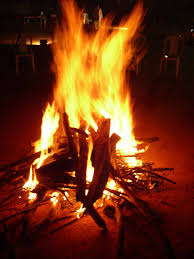
Following this purification, a great festival begins, with singing, dancing, bonfires, and feasting on goat tripe and other delicacies".
Hogmanay (Scotland)
The New Years Eve celebration of Scotland is called Hogmanay. The name derives from the old Scots name for Yule gifts of the Middle Ages. The early Hogmanay celebrations were originally brought to Scotland by the invading and occupying Norse who celebrated a solstitial new year (England celebrated the new year on March 25).
In 1600, with the Scottish application of the January 1 New year and the churches persistent suppression of the solstice celebrations, the holiday traditions moved to December 31.
The festival is still referred to as the Yules by the Scots of the Shetland Islands who start the festival on December 18th and hold the last tradition (a Troll chasing ritual) on January 18th. The most widespread Scottish custom is the practice of first-footing which starts immediately after midnight on New Years.
This involves being the first person (usually tall and dark haired) to cross the threshold of a friend or neighbor and often involves the giving of symbolic gifts such as salt (less common today), coal, shortbread, whisky, and black bun (a fruit pudding) intended to bring different kinds of luck to the householder. Food and drink (as the gifts, and often Flies cemetery) are then given to the guests. [13]
This next one was even practiced in my home state back in the 1800’s!
Junkanoo, Jonkonnu, John Canoe (West Africa, Bahamas, Jamaica, 19th-century North Carolina)
Junkanoo, in the Bahamas, Junkunno or Jonkanoo, in Jamaica, is a fantastic masquerade, parade and street festival, believed to be of West African origin. It is traditionally performed through the streets towards the end of December, and involves participants dressed in a variety of fanciful costumes, such as the Cow Head, the Hobby Horse, the Wild Indian, and the Devil.

The parades are accompanied by bands usually consisting of fifes, drums, and coconut graters used as scrapers, and Jonkanoo songs are also sung. A similar practice was once common in coastal North Carolina, where it was called John Canoe, John Koonah, or John Kooner.
John Canoe was likened to the wassailing tradition of medieval Britain. Both John Canoe and wassailing bear strong resemblance to the social inversion rituals that marked the ancient Roman celebration of Saturnalia.
Karachun (Ancient Western Slavic)
Karachun, Korochun or Kračún was a Slavic holiday similar to Halloween as a day when the Black God and other evil spirits were most potent. It was celebrated by Slavs on the longest night of the year. On this night, Hors, symbolising the old sun, becomes smaller as the days become shorter in the Northern Hemisphere, and dies on December 22nd, the December solstice.
He is said to be defeated by the dark and evil powers of the Black God. In honour of Hors, the Slavs danced a ritual chain-dance which was called the horo. Traditional chain-dancing in Bulgaria is still called horo. In Russia and Ukraine, it is known as khorovod. On December 23rd Hors is resurrected and becomes the new sun, Koleda. On this day, Western Slavs burned fires at cemeteries to keep their departed loved ones warm, organized dinings in the honor of the dead so as they would not suffer from hunger and lit wooden logs at local crossroads.
Long story short: It’s all good, and all of these holidays sound like they’d be rocking good times! So, do your thing. Worship whatever, whomever, and celebrate whatever holidays you want (or not)…
But, please, throw a Gentile a bone? A little explanation would be nice.
Xo,
Rebel Deb
Subscribe to:
Posts (Atom)